Alpro Group Launches “Together, We Transform 60+” to Catch Thyroid Problems Earlier in Older Malaysians
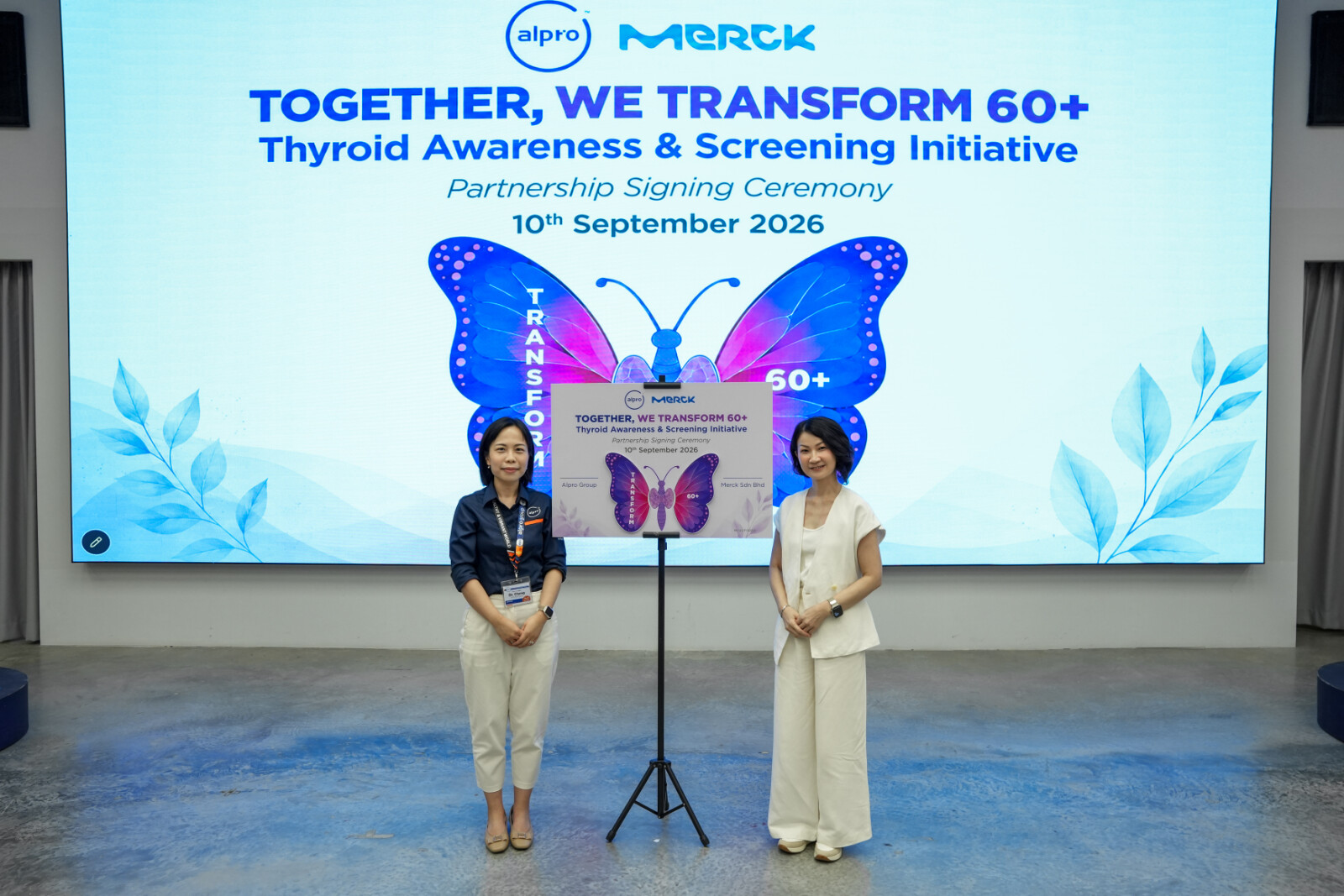
Alpro Group has launched “Together, We Transform 60+,” a community health initiative that aims to help older Malaysians understand their health risks, spot possible thyroid dysfunction sooner, and get pointed toward the right care.
The programme is backed by Merck Sdn Bhd under a Memorandum of Understanding. It focuses on adults aged 60 and above, particularly those managing hypertension or high cholesterol, and seeks to bring preventive care closer to where people live.
Why thyroid health matters
The thyroid hormones regulate many of the body’s core functions, including metabolism, energy, heart and muscle activity, and cognitive wellbeing. When thyroid function goes off track, though, the warning signs are often subtle.
Persistent tiredness, memory or concentration changes, long-term constipation, muscle aches, or unexplained weakness are easy to write off as normal ageing or as a side effect of an existing condition. These symptoms do not automatically point to a thyroid disorder, but if they persist or have no clear cause, they deserve a medical check-up.
Left unmanaged, thyroid problems can affect overall health and quality of life, and may contribute to complications involving the heart, metabolism, cognition, and bones and muscles. Catching them early gives at-risk people a better chance of getting proper assessment and treatment before the impact grows.
A structured path from awareness to care
A TSH test is widely used as a first indicator of how the thyroid is working. It can flag individuals whose results suggest that a fuller evaluation is needed.
Organisers say the real challenge is often not access to care but recognising who should be checked in the first place. Many older adults live with subtle symptoms for months or years without realising they may need investigation. By bringing thyroid education and targeted screening into community settings, the partners hope to reach people who would otherwise go undetected.
As part of the programme, Alpro is supporting screening at retail outlets. People with abnormal or borderline results will be directed to further clinical evaluation for confirmation and any necessary treatment. The aim is a clear route from learning about the condition, to being screened, to professional follow-up where needed.
Through Alpro’s community healthcare network, participants can learn about thyroid health, understand possible warning signs, and get an initial screening close to home. A screening result is not the end of the process: anyone who needs further assessment will be guided to the appropriate clinical follow-up.
Looking ahead
The organisers will use the programme’s findings to refine the screening and referral model. The longer-term goal is to gradually extend thyroid health initiatives to selected Alpro healthcare locations across the country. With Merck’s support, both companies hope to build an approach that is practical, scalable, and useful to more Malaysians over time.
What the leaders are saying
Dr. Cheng Duo-Ying, Deputy Medical Director of Alpro Clinic Group, said many older adults dismiss symptoms such as fatigue, constipation, poor concentration, or muscle weakness as an inevitable part of ageing. The problem, she said, is when those symptoms continue unexplained. The initiative is meant to make awareness and early screening easier to access, and to make sure people identified as at risk are guided to their next step of care.
Pixie Yee, Managing Director of Merck Malaysia and General Manager of Healthcare at Merck MYSG, said early detection can make a real difference in thyroid health, but the challenge is reaching people who do not realise they are at risk. She said awareness is the essential first step, and that Alpro’s strong community presence gives the programme a valuable platform to educate the public and encourage timely medical assessment.
She added that preventive care should not wait until a condition becomes serious. It should start in the community, helping people understand their risks, notice changes in their health, and seek assessment at the right time.